What to wear on a husky sled in Levi
A husky sled moves fast enough to turn a still morning at -15 °C (5 °F) into a stinging wind on your face, and the person sitting in the sled barely moves at all. Dress for the cold you feel on the trail, not for the number on the forecast. This guide goes from base layer to boots, with what the listings ask you to bring.
How cold it feels on a moving sled
Winter days around Levi often sit between -10 and -20 °C (14 and -4 °F), and a cold spell can push the thermometer below -30 °C (-22 °F). On the trail you add the wind of the ride itself, which makes bare skin feel several degrees colder.
Sled teams on groomed trails move at very roughly 10–15 km (6–9 miles) an hour. That sounds gentle, yet at -20 °C it is enough to numb uncovered cheeks and fingertips within a few minutes.
The rest of the tour is colder in a slower way. You stand around for the safety briefing, wait while the guides harness the dogs and stop for photos, so dress for long spells of standing still as well as for the wind.
Driver or passenger, two kinds of cold
On the self-drive tours two people share a sled. One stands on the runners and works the brake, pushing on the climbs, which keeps the body warm. The other sits low in the sled and hardly moves for the whole stretch.
The sitting passenger gets cold first, above all in the feet and hands. On the 7 km ride with Arctic Circle Snowmobile Park and the 15 km safari with Polar Lights Tours you swap places along the way, so both of you need clothing that works for sitting still.
On Keo Wilderness's 2 km ride a professional musher drives and you sit for the whole run. The time on the sled is short, but the seat is still the coldest place on a sled, so wrap up as warmly as you would for a longer trip.
Less waiting around in the cold
Arctic Circle Snowmobile Park runs a 7 km self-drive ride from ~$221 with pickup, so you spend less time outside before the dogs. Two people share each sled and switch drivers along the way, with warm drinks after the ride. It scores 4.7 from 500+ reviews on GetYourGuide.
Layers from the skin out
Think in layers and add one more when the forecast drops. Next to the skin goes a thin wool or synthetic base layer for top and bottom. Cotton is the wrong choice because it holds sweat and turns cold the moment you stop moving.
Over that comes a warm mid layer such as a fleece or a thin down jacket. On top you want something windproof, ideally a padded ski jacket with ski trousers, or a one-piece winter overall if you can get one.
- Top and long johns in thin wool or synthetic
- Fleece or light down mid layer, two on the coldest days
- Windproof padded jacket and trousers, or a winter overall
- One pair of thick wool socks, plus a spare in your bag
- A warm hat that covers the ears and fits under a hood
Tight boots are colder than loose ones because they squeeze the blood flow in your feet. One good pair of wool socks with room to move your toes usually beats two pairs crammed into the same boot.
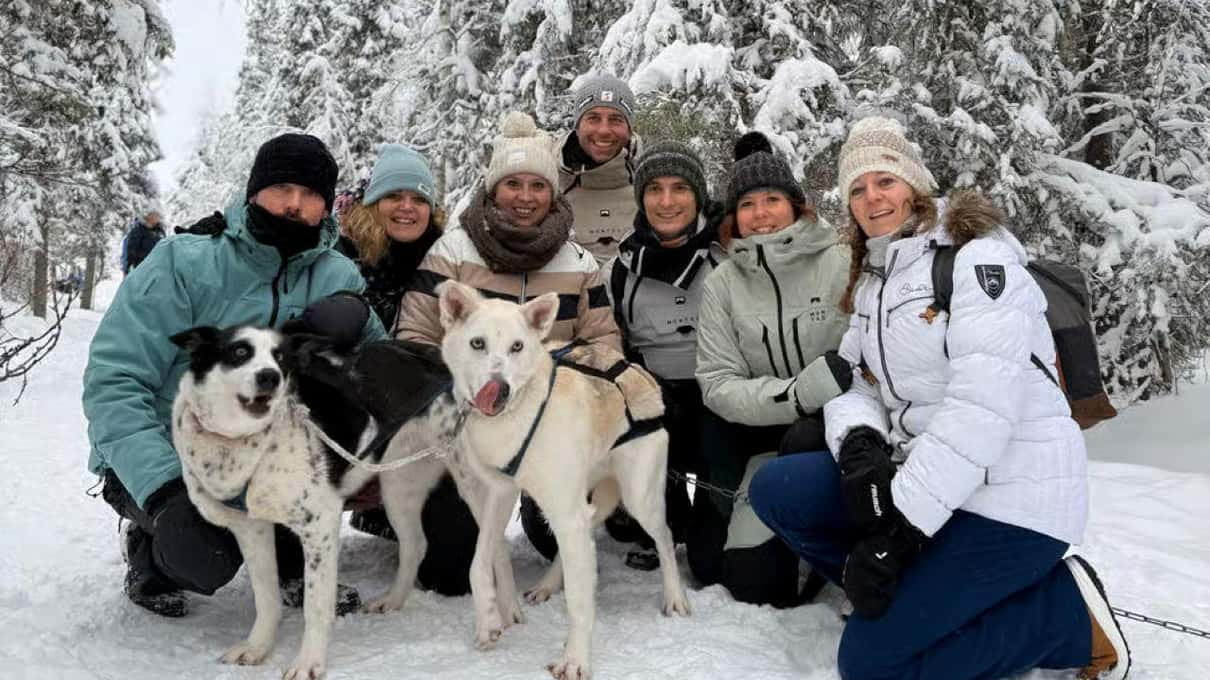
Your hands and face
Hands suffer most on a sled. Wear thin liner gloves under thick mittens, since mittens keep the fingers together and warmer than any glove, and you can slip a hand out for a photo without baring skin to the air.
The driver needs a firm grip on the handlebar for the whole run, so choose mittens you can hold a bar with. Very bulky ones make that tiring on a longer ride such as the 15 km safari.
Cover your face with a buff or a balaclava pulled up over the nose. Ski goggles stop your eyes watering in the wind and keep the snow the dogs kick up out of them, which matters more for the passenger sitting at dog height.
Try a simple test before you leave the hotel. Stand outside for ten minutes in what you plan to wear, and if you feel cold standing still, you will be colder sitting in a sled.
Boots for standing in deep snow
Keo Wilderness's listings ask guests to bring warm clothing and warm shoes, and that advice suits every tour on this site. Sneakers or city boots are a poor choice, because you will stand in snow at the farm and ride with your feet in it.
Look for insulated winter boots with a thick sole that are rated well below freezing. Half a size up leaves room for a thicker sock, and a boot that laces high keeps snow out when you step off the packed trail.
Bring it or rent it in Levi
Some safari companies in Lapland lend winter overalls and boots, but the listings for these five tours do not all confirm it. Check the listing for your tour before you book, and ask the operator if it says nothing either way.
If you arrive without proper winter gear, Levi has rental shops in the village that hire out winter clothing. Renting for a day or two saves money and suitcase space, which helps if you are flying in from somewhere warm.
Our guide to what a husky ride in Levi costs shows what each ticket covers and what can cost extra. Clothing hire belongs on that list when you compare one tour with another.
Phones and cameras in the cold
Phone batteries drain fast in the cold and sometimes switch off at half charge. Keep the phone in an inside pocket close to your body, bring it out only for the shot, and carry a small power bank in the same pocket.
Leave scarves with long loose ends at home, or tuck them in well, so they cannot catch on the sled. Lip balm and a tissue for a runny nose are the two small things people most often wish they had packed.
If you are driving, a phone in your hand is a phone you are not holding the handlebar with. The guide to driving the team or riding along shows why passengers take most of the pictures.
Before your ride
The night before, lay everything out, from spare socks to goggles. Early tours start in low light, and it is easier to dress well when you are not hunting for a lost mitten.
Your first time on the runners walks through the briefing and the brake, and husky sledding with children covers keeping small hands warm. For the coldest weeks, the best months for huskies in Levi compares light and temperature.