How the Levi sled huskies live
The dogs that pull you across a frozen lake near Levi are working animals with a routine of their own. This page covers how sled huskies typically live and what the tour listings say about the dogs, with a few questions to ask at the farm. It stays general where the listings say little.
Two kinds of husky
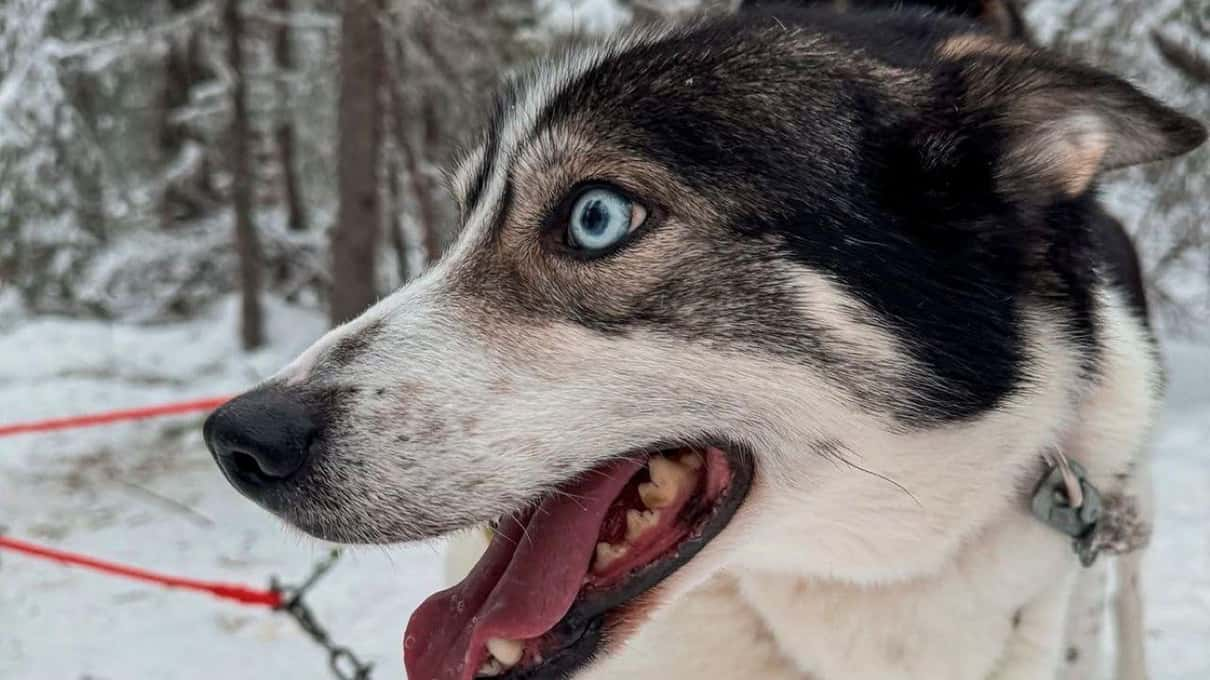
Many sled teams in Lapland run Alaskan huskies, a working mix bred for pulling and racing rather than for looks. They tend to be leaner than the dogs people picture. Coats and eye colors are mixed.
The Siberian husky is the pedigree breed, the one with the well-known blue eyes. Keo Wilderness's listings mention both Alaskan and Siberian huskies, so you may meet a mix of the two at its base.
A typical day at a sled kennel
Sled dogs usually live outdoors in kennels with a doghouse or a shared pen, and their thick coats suit them to the cold. Winter around Levi often sits at -10 to -20 °C (14 to -4 °F), which the dogs handle far better than visitors do.
Teams are generally made up of dogs that work well together, and a dog's place in the line can change. The leaders at the front respond to the musher's calls, while the dogs nearest the sled take much of the weight.
What surprises many visitors is the noise before a run. Huskies bred for pulling love to run. The barking and jumping at harnessing time usually stops the moment the team sets off.
Between runs the dogs rest and sleep in their kennels, and well-run farms build in days off. How many runs a dog does in a day varies from kennel to kennel, which is one of the questions below.
Huskies in the cold and the dark
Around 170 km (105 miles) above the Arctic Circle, Levi sits in Kittilä municipality. In the polar night around Christmas there is no sunrise at all, so kennel work runs by headlamp and in the short blue twilight at midday.
The dark bothers the visitors more than the dogs. Huskies keep to their routine of feeding and running whatever the light, and a cold, clear day with firm snow is when a team tends to run best.
Warm spells are harder on them than cold ones. A heavy coat built for -30 °C (-22 °F) makes a mild, wet day tiring, so guides may slow the pace or shorten a loop when the snow turns soft.
For you, the cold is the bigger challenge, especially sitting still in the sled. Our guide to what to wear covers the layers, and the month guide explains how the light changes through the winter.
What the Keo listings say about the dogs
Keo Wilderness's 5 km ride from ~$167 ends with time to play with 4-month-old husky puppies, and there is a reindeer spot nearby for photos. The listing also asks guests not to feed the animals.
Viator's copy of the same tour mentions an ethical-care and no-kill policy for the dogs. That is the operator's own claim on the listing and we cannot check it, but it gives you something specific to ask about at the base.
The 5 km tour holds 4.8 from 590+ reviews on GetYourGuide and 4.7 from 10+ on Viator. It is our pick on the price comparison, with the catch that it takes no one under 4 or over 70.
Drive the team, then meet the puppies
Keo Wilderness's two-hour tour from Burger King Levi with a 5 km (3 mile) self-drive run. Alaskan and Siberian huskies pull, and the puppies wait at the end.
Meeting the dogs on shorter tours
Keo's 2 km ride from ~$117 is the way to see the same kennel's dogs without driving. A musher handles the team, and Viator's version of the listing adds the puppies and the reindeer spot, so check which version you book.
Easy Travel's reindeer and husky safari from ~$278 visits a husky farm after the reindeer half, with time to pet the dogs alongside the briefing and the sled ride. Our reindeer combo guide has the details.
Neither of these gives you long with the dogs on the trail, and our guide to ride lengths shows how short each run is. For the farm visit itself, though, the shorter tours can feel much the same.
Questions to ask at any farm
None of the listings gives details of daily care beyond what we quote here. If welfare matters to you, ask the guide at the base, since good kennels are usually glad to talk about their dogs.
- How many runs a dog does in a day, and how many rest days it gets
- What happens to dogs that are too old to run
- Whether the puppies stay with the kennel as future team dogs
- How the dogs cope in a hard cold spell or a mild, wet week
Watch the dogs as well as listening. Alert, eager dogs in clean kennels are a good sign, and so is a guide who checks paws and harnesses before the start.
Being a good visitor
Follow the guide on when and how to touch the dogs. Some are calm and love attention, while others are focused on running and better left alone in harness.
Do not feed the animals, which Keo's listing forbids outright. Guests with animal allergies are told to skip Keo's tours, and anyone nervous of dogs may prefer to sit as a passenger, which our self-drive guide compares.
For children meeting huskies for the first time, our family guide covers the puppies and the limits. For the run itself, the first-ride guide explains what the briefing asks of you.